
Ceramic vs. Porcelain Tile: What Sets Them Apart
Porcelain tile is defined by how little water it absorbs. Here is TCNA's 0.5% line, how to spot true porcelain, glazed vs. unglazed, slip ratings and what to check room by room.
Mr. Wright Flooring · Nov 18, 2026
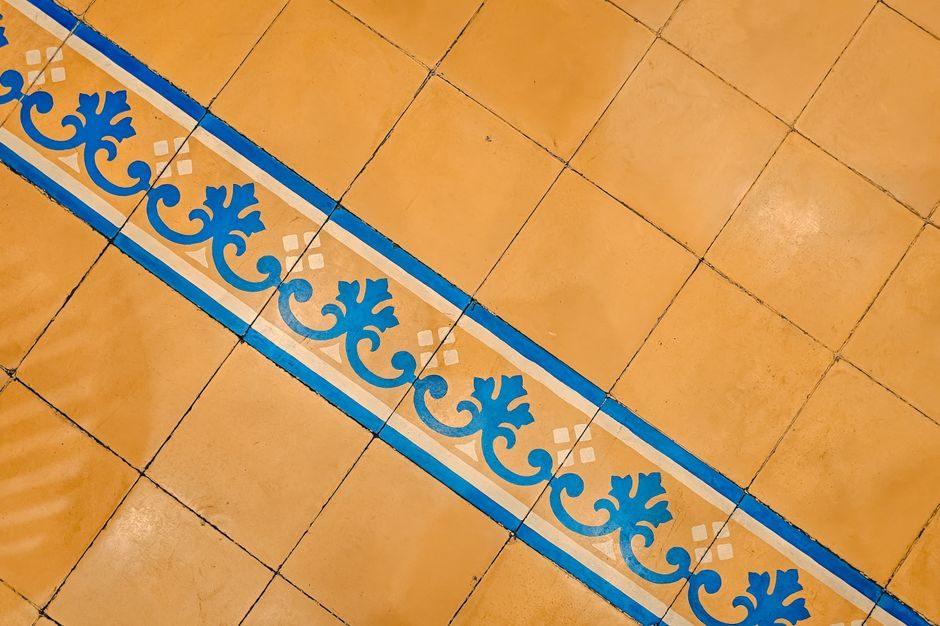
Porcelain tile is defined by how little water it absorbs. The Tile Council of North America (TCNA) frames the question as porcelain versus non-porcelain tile: porcelain tiles have water absorption of 0.5% or less, and non-porcelain tiles absorb more than that. Porcelain is harder to cut and bond, but TCNA says that matters more to the installer than to you, as long as the installer uses the right materials.
Mr. Wright Flooring is a family-owned flooring company in Jacksonville, serving Northeast Florida since 2012, and we sell and install tile flooring. This post is part of our complete guide to choosing a floor. Below, we cover how TCNA defines porcelain, how to tell whether a tile meets that definition, glazed versus unglazed tile, slip ratings, and what to weigh room by room.
What makes a tile porcelain?
TCNA explains that porcelain tiles are typically made with "porcelain" clays that have specific properties, and that these tiles are typically dense. The dividing line is water absorption. In TCNA's words, standards define porcelain tile as an impervious tile with water absorption of 0.5% or less, measured by the ASTM C373 test method. A tile that absorbs more than 0.5% is non-porcelain.
Non-porcelain tile covers a wide range of properties. TCNA says it is typically glazed, with unglazed quarry tile as the exception, and that the glaze layer can be extremely durable. Because glazes differ, TCNA advises checking whether the tile has been tested and whether its glaze hardness suits the place you plan to use it.
The two also behave differently on the job. TCNA says non-porcelain tiles are generally easier to bond to the floor and usually easier to cut, while porcelain tiles are harder to bond and harder to cut. It adds that this generally makes little difference to the homeowner, so long as the installer uses the right materials.
Key takeaway
Porcelain is a tested category, not a look: under the standards TCNA cites, a tile counts as porcelain only if its water absorption is 0.5% or less on the ASTM C373 test.
| Porcelain | Non-porcelain | |
|---|---|---|
| Water absorption (ASTM C373) | 0.5% or less | More than 0.5% |
| Make-up | Typically dense, made with porcelain clays | Typically glazed; unglazed quarry tile is the exception |
| Cutting and bonding | Harder to cut and harder to bond | Generally easier to bond and usually easier to cut |
Source: TCNA porcelain FAQ. TCNA says the cutting and bonding difference generally makes little difference to the homeowner if the installer uses the right materials.
How to tell whether a tile is true porcelain
A label alone does not settle it. TCNA notes that there are many cases where tile that does not meet the porcelain standard is advertised and sold as porcelain.
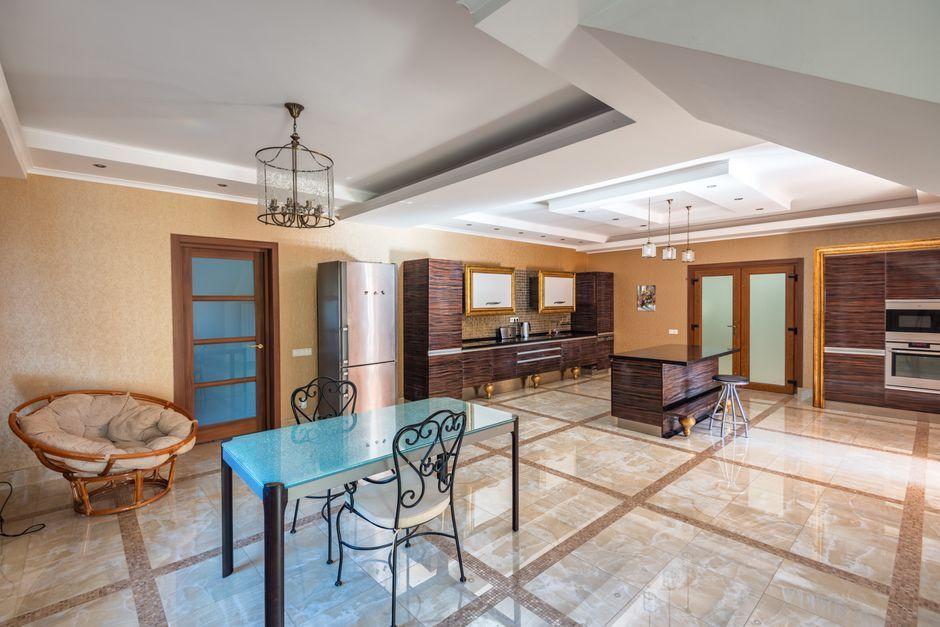
To address that, the Ceramic Tile Distributors Association (CTDA) and TCNA launched the Porcelain Tile Certification Agency (PTCA). Under the program, manufacturers can have their tile independently tested against the 0.5% water absorption requirement, then use the PTCA mark on packaging and marketing materials. According to TCNA's porcelain FAQ, a tile that carries the PTCA mark has been certified as true porcelain.
When you compare samples, ask whether the tile carries the PTCA mark, and read the manufacturer's literature for its recommended uses.
Glazed or unglazed porcelain?
Porcelain comes both glazed and unglazed. TCNA says glazed porcelain is usually a little easier to clean, and that glazed porcelain typically has filled in the microscopic holes that can be present in unglazed tile. Unglazed porcelain, on the other hand, may have better slip resistance.
Some people call unglazed porcelain "through body," meaning the color on top runs all the way through the tile. TCNA says these tiles tend not to show wear even in extreme applications, describing porcelain as quite durable and "harder than granite." Many glazed porcelains are also very durable, and TCNA says their surface is usually resistant enough to abrasion not to show wear in typical use.
Key takeaway
TCNA says glazed porcelain is usually a little easier to clean, while unglazed porcelain may grip better underfoot, so match the finish to how the room is used.
Glazed porcelain
Usually a little easier to clean; many are very durable and usually don't show wear in typical use.
Unglazed porcelain
May have better slip resistance; tends not to show wear even in extreme applications.
Source: TCNA porcelain FAQ
Slip resistance ratings to ask about
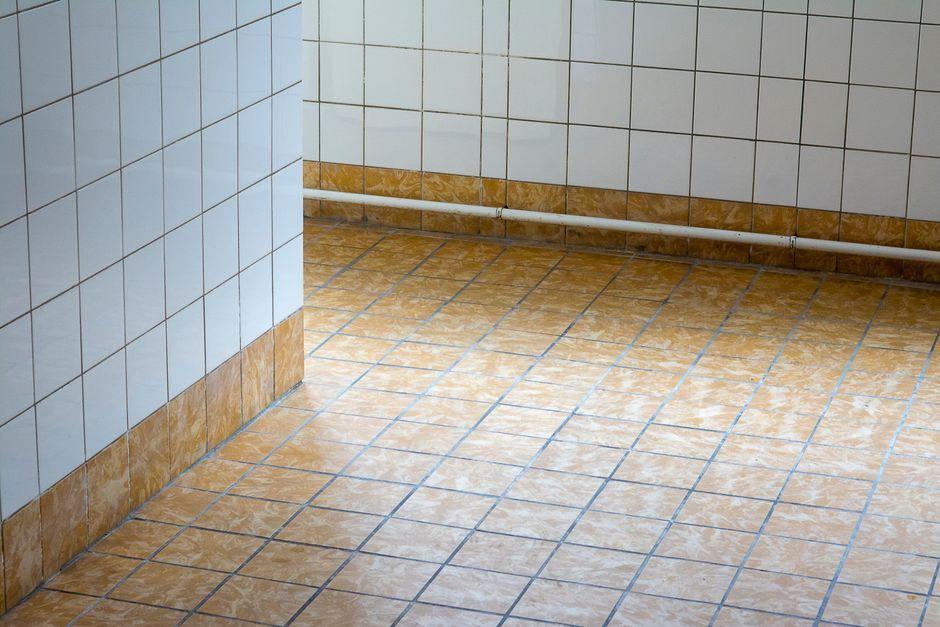
Slip resistance has its own label. In a February 2, 2022 announcement, TCNA said the national standard ANSI A326.3 now requires hard surface flooring manufacturers to provide product use classifications based on slip resistance. Each product is classified into one or more of five categories:
- Interior, Dry (ID)
- Interior, Wet (IW)
- Interior, Wet Plus (IW+)
- Exterior, Wet (EW)
- Oils/Greases (O/G)
For a bathroom, an entry or any floor that will get wet, ask which of these categories the manufacturer lists for the tile you like. Our guide to the best flooring for kitchens and bathrooms covers those rooms in more detail.
Which tile works where?
For any specific tile, TCNA's advice is to check the manufacturer's "area of use." That applies outdoors too. TCNA says porcelain is not the only tile rated for exterior use, and many non-porcelain quarry tiles are rated for exterior applications.
Low absorption does not make a tiled floor watertight. TCNA says grout joints are not waterproof, and in a wet area such as a shower you rely on the installation method and substrate to protect adjoining areas from water. TCNA lists showers, steam rooms, pools, spas and outside decks among the areas that require proper installation or a failure can occur. If you are weighing tile against other floors for a wet room, our guide to waterproof vs. water-resistant flooring explains what those labels cover.
What goes under the tile matters too
Porcelain or not, a tile floor depends on what it sits on. TCNA says the entire substrate below the tile is important, not only the layer the tile is bonded to. It gives L/360 as the traditional minimum for floor rigidity before the tile underlayment goes in, meaning the floor should not deflect more than its span divided by 360. TCNA also says that when tile is set by the thinset method over an uneven substrate, the finished surface often will not meet lippage standards, which limit the height difference between neighboring tiles.
TCNA recommends allowing for expansion and contraction in every tile installation, and says that for interior installations, movement joints are placed more often where moisture or direct sunlight is expected. It also says crack isolation membranes do not remove the need for those joints. On every project we install, an experienced team leader supervises the work and keeps it inside the manufacturer's warranty guidelines. Our post on what goes into a tile installation quote walks through how these steps shape a job.
Key takeaway
TCNA ties a tile floor to its base: L/360 as the traditional minimum rigidity, a flat substrate so the surface can meet lippage standards, and movement joints in every installation.
Choosing between ceramic and porcelain
If you want the lowest water absorption, look for tile that meets TCNA's porcelain definition and carries the PTCA mark. If a non-porcelain tile has the look you want, check that its glaze is suited to the room. Either way, ask for the slip resistance classification and the manufacturer's area of use.
You can buy tile from us and have our crew install it, have us install tile you bought elsewhere through our professional installation service, or buy the material from us and install it yourself. Not sure tile is the right floor at all? Request a free estimate and we'll measure your rooms at no charge.
Frequently asked questions
Is porcelain tile better than ceramic?
TCNA frames this as porcelain versus non-porcelain tile. Under the standards TCNA cites, porcelain has water absorption of 0.5% or less, and TCNA says it is typically dense. Unglazed porcelain tends not to show wear. Non-porcelain tile absorbs more than 0.5%, but TCNA says its glaze can be extremely durable and that it is usually easier to cut and bond. For either one, TCNA's advice is to check that the tile's glaze and its manufacturer's area of use suit where you plan to put it.
Is porcelain tile waterproof?
TCNA's definition is about absorption. It defines porcelain as an impervious tile with water absorption of 0.5% or less on the ASTM C373 test. TCNA also says grout joints are not waterproof, so in a wet area such as a shower, the installation method and the substrate under the tile are what protect adjoining areas from water. A porcelain floor is only as water-tight as the way it is installed.
How can I tell if a tile is real porcelain?
Look for the Porcelain Tile Certification Agency (PTCA) mark. TCNA says some tile that does not meet the porcelain standard is still advertised and sold as porcelain. Under the PTCA program, launched by the Ceramic Tile Distributors Association and TCNA, manufacturers can have their tile independently tested against the 0.5% water absorption requirement. TCNA says a tile carrying the PTCA mark has been certified as true porcelain.
Is porcelain tile harder to install?
TCNA says porcelain tiles are harder to bond and harder to cut than non-porcelain tiles, which are generally easier on both counts. It also says this generally makes little difference to the homeowner, as long as the installer uses the right materials. The rest of the job, such as a rigid, flat substrate and movement joints, applies to both types.
Should I choose glazed or unglazed porcelain for a bathroom?
Each has a strength. TCNA says glazed porcelain is usually a little easier to clean, while unglazed porcelain may have better slip resistance. Under ANSI A326.3, hard surface flooring manufacturers classify products into slip resistance categories such as Interior, Dry and Interior, Wet. For a bathroom floor, ask which category the manufacturer lists for the tile you are considering.
Can porcelain tile be used outdoors?
It can be, but check the product. TCNA says porcelain's low water absorption usually makes it frost resistant, though not always, and to check the manufacturer's literature. TCNA also says porcelain is not the only tile rated for exterior use, since many non-porcelain quarry tiles are. Always check the manufacturer's area of use for the specific tile.
Thinking about new floors?
The same crew, still family-owned. Free in-home estimate across Jacksonville and Northeast Florida.